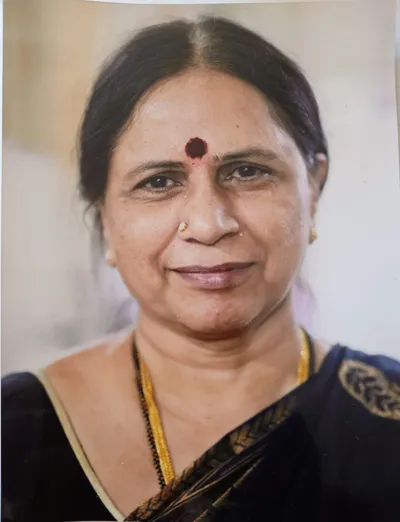
Dr. M. Balamani is an art historian, critic, and cultural analyst. She holds a Master’s degree and Ph.D. in Art History and Aesthetics from the Faculty of Fine Arts, M.S. University of Baroda, where she also worked on a UGC assignment and taught at the Department of Art History. She later taught at JNAFA University, Hyderabad, and served as a member of the Board of Studies at Acharya Nagarjuna University, Andhra Pradesh (2021–2023). Earlier, she also earned a Master’s degree in Biological Sciences from Kakatiya University, Warangal.
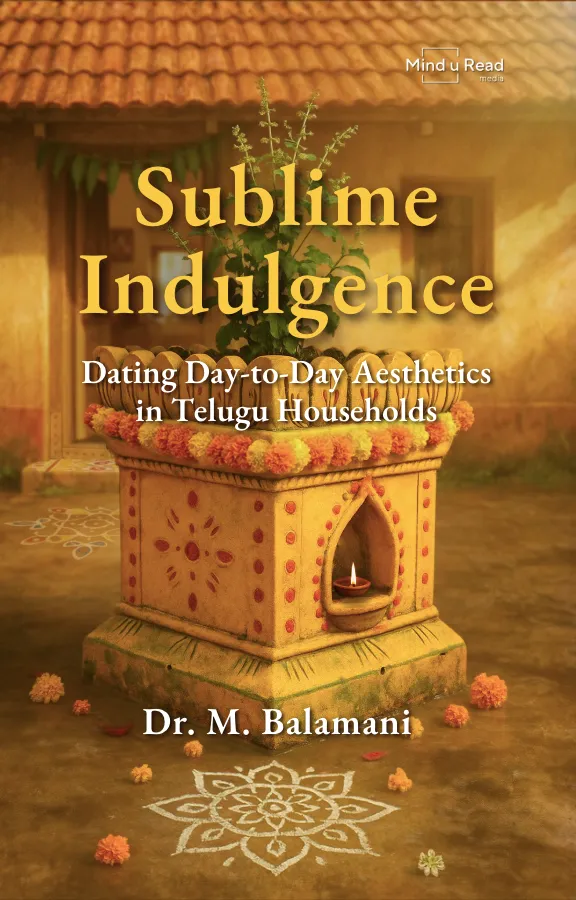
Her research spans Modern and Contemporary art as well as Pre-Modern visual traditions, including the 18th century. She has earlier published two major books: Bharateeya Drusya Kala Charitra (a history of Indian art from Prehistory to the Pre-Modern period, in Telugu) and Women as Artists (1920–2020): Changing Visual Art Themes of Changing Times (bilingual, Telugu and English), both brought out by Navatelangana Publishers, Hyderabad. She also edited and contributed to Museums in Gujarat (2000), published by the Directorate of Gujarat Museums. One of her significant research studies is on the Soundaryalahari illustrated manuscript preserved at the Oriental Institute, Baroda.
She has delivered keynote addresses and special lectures at several universities and cultural institutions across India, including M.S. University Baroda, IGNCA Vadodara, Rajasthan Lalit Kala Akademi Jaipur, CCRT Hyderabad, Potti Sriramulu Telugu University, Parul University, Jaipur Design Institute, Maharaja Fatehsingh Museum Baroda, Birla Museum Hyderabad, and various art societies in Andhra Pradesh and Assam. Her talks have centred on the history, and modern and contemporary aesthetics of visual arts.
As a curator, she has organised exhibitions and workshops on modern and contemporary art, notably the 1999 photography exhibition 1899–1900 Gujarat Famine. She has written over 300 articles in English and Telugu for art journals, newspapers, and magazines, including scholarly essays, columns on modern and contemporary artists, reflections on festivals and rituals, social history, and travelogues from her European travels. Many of her works have been translated into Gujarati and Hindi.
Her engagement with the arts also extends to media. She has anchored artist interviews on Gujarat’s JTV channel, directed a documentary on silk textile craft, and continues to make films on senior contemporary artists.