
This novel narrates the story of hunger and the lies of those who internalise things.
- Accepted
- Editing
- Design
- Final proofs
- Printing
- Pages
- 158
- ISBN
- 9788198862938
- Language
- English
About the book
Anasuya, referred to as Ante, Antatte, and Antakka by her people, is not just a character but the very core of the novel. She is married to a freedom fighter, Subbarayappa, and there is absolutely no intimacy between them. Even as he participates in the freedom struggle and is imprisoned, Antakka becomes pregnant following the dictates of her body, beyond her wish. Though this breaks the hearts of her in-laws, the cohabitation continues, even when Subbarayappa is released from prison and returns home. They all persist with a life of pretence under the same roof, retaining the dignity of their personalities in the shadow of life-devouring pain.
When Puttanna, who is responsible for Antakka’s pregnancy, dies suddenly, his wife Thangu becomes an orphan. It is Antakka who shelters and protects this widow amidst the pain and hardships of her own.
Was Puttanna’s death an accident? Murder? If it was a murder, who was the culprit? For what reason? Why? It was truly unfortunate that Antakka became pregnant. But was it a crime? If so, who should be punished? Who answers in the form of their opinions regarding the events that unfold.
“Do not insult me; you internalise things like me, and then see,” says Antakka, challenging her God and the society that surrounds her. Her gods have forsaken her long ago. But who will provide the answers to her questions? History does not confront such challenges. As all histories are those recorded by the victors, justice belongs only to those who triumph; this is the truth. But Novel is not history. It is the story of those who are vanquished. It only raises questions.
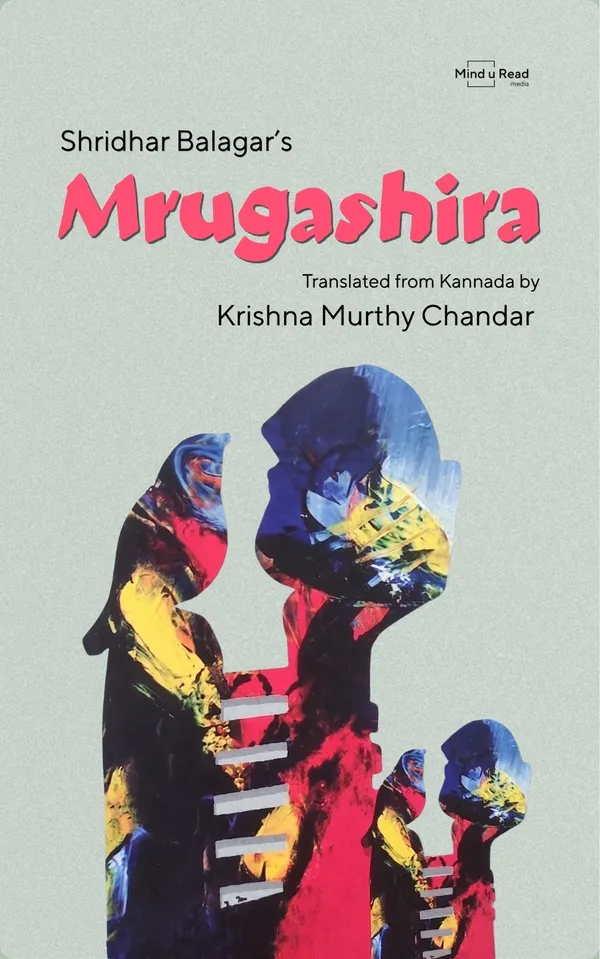
‘Mrugashira’ is the name of a star. In the novel, it becomes a symbol of the duality of feet sunk in the mud, but the mind is fluttering in the sky.
G. Rajashekara